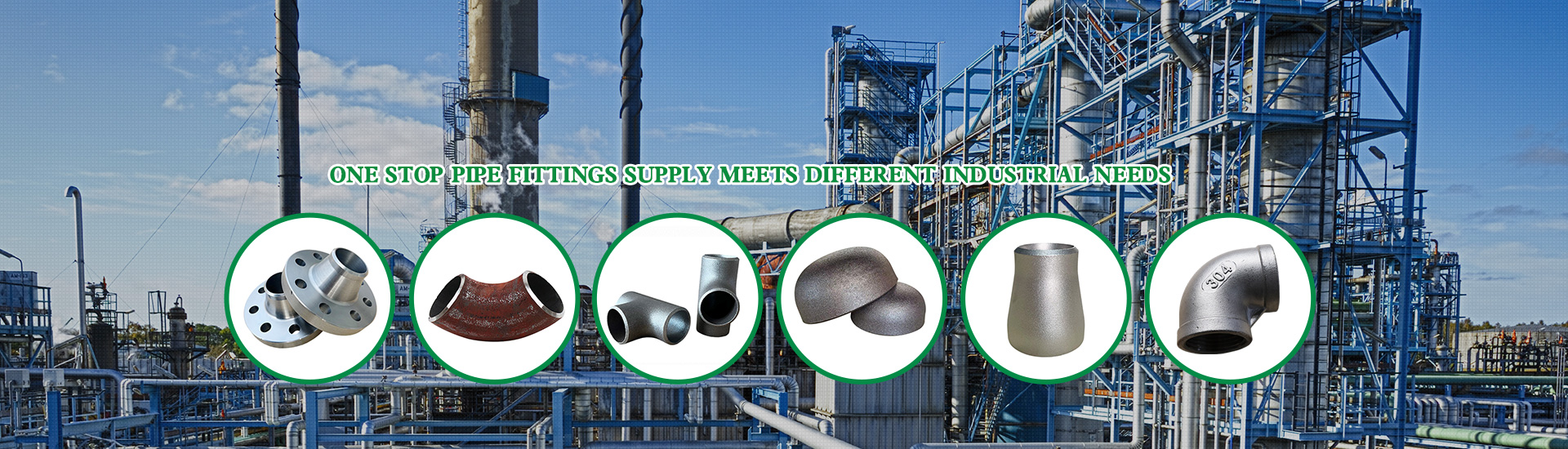
Pipe fittings are critical components in industrial piping systems, and any defect can lead to leakage, pressure failure, or even catastrophic accidents. These defects may occur during manufacturing, transportation, storage, or installation. Proper inspection methods are essential to ensure quality, safety, and long-term reliability.
1. Surface Cracks
Surface cracks are one of the most dangerous defects in pipe fittings.
Causes
Improper forging or casting process
Rapid cooling during manufacturing
Excessive mechanical stress
Poor heat treatment
Risks
Inspection Methods
2. Porosity and Internal Voids
Porosity refers to small holes or cavities inside the material.
Causes
Risks
Inspection Methods
3. Dimensional Inaccuracy
Incorrect dimensions affect system compatibility.
Common Issues
Causes
Inspection Methods
4. Surface Roughness and Scaling
Poor surface quality can affect flow efficiency and corrosion resistance.
Causes
Risks
Inspection Methods
5. Wall Thickness Variation
Uneven wall thickness reduces pressure resistance.
Causes
Poor forming or bending process
Incorrect pipe manufacturing
Eccentric deformation during production
Risks
Inspection Methods
6. Weld Defects (for Welded Fittings)
Welded fittings may contain structural defects.
Common Weld Defects
Lack of fusion
Incomplete penetration
Slag inclusion
Cracks in weld zone
Causes
Poor welding technique
Incorrect parameters
Contaminated surfaces
Inspection Methods
Radiographic testing (RT)
Ultrasonic testing (UT)
Magnetic particle testing (MT)
Dye penetrant testing (PT)
7. Corrosion and Rust
Corrosion can occur during storage or operation.
Causes
Risks
Inspection Methods
8. Ovality and Deformation
Ovality refers to deviation from perfect circular shape.
Causes
Improper forming or bending
Mechanical impact during transport
Excessive stress during installation
Risks
Poor fit with pipes
Stress concentration
Inspection Methods
Diameter measurement
Template gauges
3D scanning
9. Heat Treatment Defects
Improper heat treatment affects mechanical properties.
Causes
Uneven heating or cooling
Incorrect process control
Overheating or underheating
Risks
Inspection Methods
10. Coating and Surface Protection Defects
Coating quality directly affects corrosion resistance.
Common Issues
Coating peeling
Uneven thickness
Pinholes or bubbles
Causes
Inspection Methods
Holiday (spark) testing
Coating thickness gauge
Adhesion testing
Conclusion
Pipe fitting defects can originate from manufacturing, handling, or installation processes and may seriously affect system safety and performance. Common defects include cracks, porosity, dimensional errors, corrosion, weld defects, and coating failures. A combination of non-destructive testing methods such as UT, RT, PT, and MT, along with dimensional and visual inspections, ensures product quality and reliability. Proper quality control is essential for safe and long-lasting industrial piping systems.
References
ASME B31.3 – Process Piping
ASTM E94 – Radiographic Examination Standards
ASTM E165 – Liquid Penetrant Examination
ASTM E709 – Magnetic Particle Testing
API 570 – Piping Inspection Code
ISO 9712 – Non-Destructive Testing Certification Standards