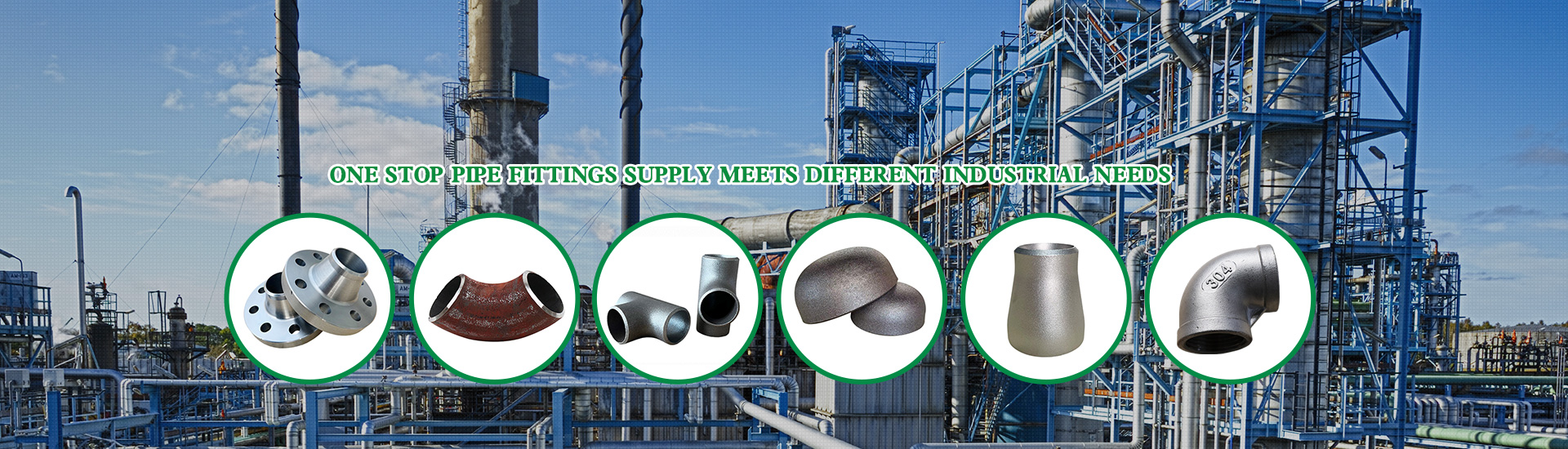
Industrial pipeline systems rely on different connection methods to join pipes, fittings, valves, and equipment. The choice of connection method directly affects system strength, installation speed, maintenance requirements, and long-term reliability. The most common methods include welded, flanged, threaded, and grooved connections.
This article compares these methods in terms of performance, applications, advantages, and limitations.
1. Welded Connections
Welding is one of the most widely used permanent pipeline connection methods.
Types
Butt welding
Socket welding
Advantages
Extremely strong and leak-proof joint
Suitable for high pressure and high temperature
No external leakage points
Long service life
Limitations
Requires skilled welders
Time-consuming installation
Difficult to disassemble or modify
Hot work permits required
Applications
Welded connections are ideal for permanent, high-integrity systems.
2. Flanged Connections
Flanged joints use bolts and gaskets to connect pipe sections.
Advantages
Easy to assemble and disassemble
Suitable for maintenance-heavy systems
Good sealing performance when properly installed
Allows equipment connection (pumps, valves)
Limitations
Requires precise alignment
Potential leakage if gasket fails
Higher weight and cost compared to welded joints
Requires regular maintenance
Applications
Industrial process piping
Pump and valve connections
Water treatment plants
Medium to high-pressure systems
Flanged systems are preferred where maintenance and flexibility are important.
3. Threaded Connections
Threaded joints use screw threads to connect pipes.
Advantages
Limitations
Limited to low-pressure systems
Prone to leakage under vibration
Not suitable for large pipe sizes
Threads may corrode or wear over time
Applications
Threaded connections are mainly used in small-scale applications.
4. Grooved Connections
Grooved systems use mechanical couplings with rubber gaskets.
Advantages
Fast installation
No welding or threading required
Flexible and vibration-resistant
Easy maintenance and modification
Safer installation (no hot work)
Limitations
Limited pressure rating compared to welded systems
Requires precise groove preparation
Gasket condition affects sealing performance
Applications
Grooved systems are widely used in modern construction for speed and flexibility.
5. Socket Weld Connections
Socket weld is mainly used for small-diameter high-pressure systems.
Advantages
Strong and leak-resistant
Suitable for high pressure in small pipes
Better than threaded joints in strength
Limitations
Applications
Chemical plants
Hydraulic systems
Instrument piping
6. Key Comparison Overview
Strength
Welded: Highest
Flanged: High
Grooved: Medium
Threaded: Low
Installation Speed
Grooved: Fastest
Threaded: Fast
Flanged: Medium
Welded: Slow
Maintenance
Grooved: Easy
Flanged: Easy
Threaded: Moderate
Welded: Difficult
Pressure Capability
7. Selection Guidelines
Choose the appropriate connection method based on:
System pressure and temperature
Fluid type (corrosive or non-corrosive)
Installation environment
Maintenance requirements
Budget and construction schedule
Safety requirements (hot work restrictions)
Conclusion
Industrial pipeline connection methods each serve different engineering needs. Welded connections provide maximum strength and reliability, flanged connections offer flexibility and maintenance convenience, threaded connections are suitable for small low-pressure systems, and grooved systems deliver fast, safe installation for modern construction projects. The optimal choice depends on system design, operating conditions, and lifecycle cost considerations.
References
ASME B31.3 – Process Piping
ASME B16.5 – Pipe Flanges and Flanged Fittings
ASME B16.9 – Buttwelding Fittings
NFPA 13 – Fire Protection Systems
API 570 – Piping Inspection Code
Crane TP-410 – Flow of Fluids Through Valves, Fittings, and Pipe