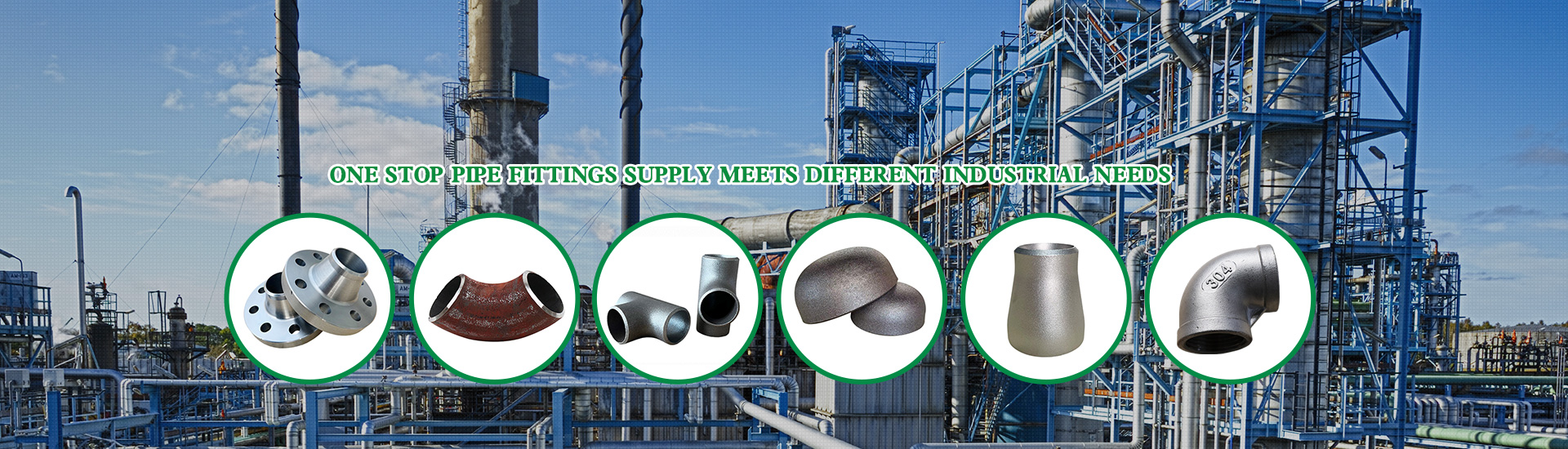
Manufacturing Process Standards for Pipe Bends and Elbows
Pipe bends and elbows are essential fittings used to change the direction of piping systems in industries such as oil & gas, construction, power plants, and water treatment. Their quality directly affects system safety and durability. Below is a comprehensive overview of commonly adopted manufacturing processes and relevant standards.
1. Applicable Standards
The production of pipe bends and elbows generally follows international standards to ensure dimensional accuracy, mechanical performance, and interchangeability:
ASME B16.9 – Factory-Made Wrought Buttwelding Fittings
ASME B16.28 – Short Radius Elbows and Returns
MSS SP-75 – High-Test Wrought Buttwelding Fittings
EN 10253 – Butt-welding Pipe Fittings (Europe)
GB/T 12459 – Steel Butt Welding Pipe Fittings (China)
GB/T 13401 – Steel Plate Welded Pipe Fittings
2. Main Manufacturing Processes
1. Hot Forming (Hot Pushing / Induction Bending)
This is one of the most widely used methods for producing elbows.
The pipe is heated to a high temperature
A pushing machine and mandrel are used to form the bend
Suitable for large diameter and thick-wall fittings
Advantages:
Uniform wall thickness, good mechanical properties, high efficiency
2. Cold Forming (Cold Bending)
Performed at room temperature using bending machines.
Advantages:
Good surface finish, energy saving
Limitations:
Higher internal stress, may require heat treatment afterward
3. Welding Fabrication (Segmented Elbows)
Used for large-diameter elbows where forming is difficult.
Advantages:
Flexible production, suitable for oversized dimensions
Limitations:
Weld quality must be strictly controlled
4. Extrusion / Pushing Process (Seamless Elbows)
Advantages:
No weld seams, high strength, widely used in high-pressure systems
3. Heat Treatment Requirements
Depending on material and process, heat treatment is often required:
Normalizing – improves grain structure
Quenching and tempering – enhances strength and toughness
Stress relieving – reduces residual stress after forming or welding
4. Dimensional and Tolerance Control
Manufactured bends and elbows must meet strict dimensional tolerances:
Inspection tools include calipers, templates, and coordinate measuring devices.
5. Surface Quality Requirements
No cracks, folds, or over-burning
Smooth inner and outer surfaces
Weld seams (if any) must be free from defects such as porosity or slag inclusion
Surface treatments may include:
6. Non-Destructive Testing (NDT)
To ensure product integrity, the following tests are commonly applied:
Ultrasonic Testing (UT)
Radiographic Testing (RT)
Magnetic Particle Testing (MT)
Liquid Penetrant Testing (PT)
7. Mechanical and Chemical Testing
These ensure compliance with material standards and project specifications.
8. Marking, Packaging, and Traceability
Each product should be clearly marked with size, material grade, standard, and heat number
Proper packaging prevents damage during transport
Full traceability documentation is required for quality assurance
Conclusion
The manufacturing of pipe bends and elbows involves strict control over forming processes, heat treatment, dimensional accuracy, and inspection. Adhering to international standards ensures that the fittings meet the demands of high-pressure, high-temperature, and corrosive environments, guaranteeing safety and long service life.
References
ASME B16.9 – Factory-Made Wrought Buttwelding Fittings
ASME B16.28 – Short Radius Elbows and Returns
MSS SP-75 – High-Test Wrought Buttwelding Fittings
EN 10253 – Butt-welding Pipe Fittings
GB/T 12459 – Steel Butt Welding Pipe Fittings
GB/T 13401 – Steel Plate Welded Pipe Fittings
API 5L – Specification for Line Pipe
ASTM A234 – Standard Specification for Piping Fittings of Wrought Carbon Steel and Alloy Steel