Carbon Steel Hot Induction Bends
Carbon Steel Hot Induction Bends Precision Curvature for Critical Pipeline Infrastructure Our Carbon Steel Hot Induction Bends are engineered for piping systems that require precise...

Product Details
Carbon Steel Hot Induction Bends
Precision Curvature for Critical Pipeline Infrastructure
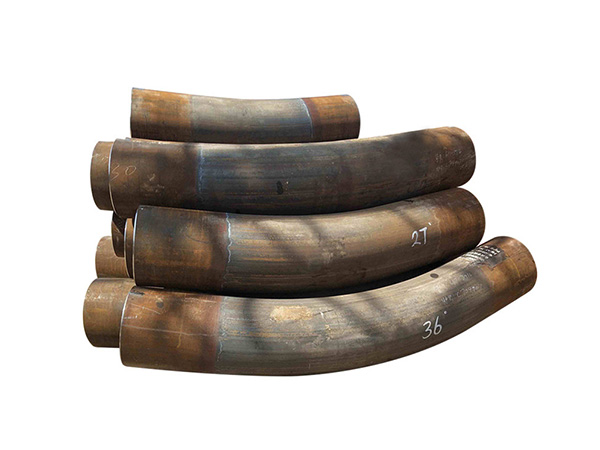
Our Carbon Steel Hot Induction Bends are engineered for piping systems that require precise directional changes with superior structural integrity. Unlike standard factory-made elbows, hot induction bends are manufactured by heating a specific section of a straight pipe and bending it to the exact required angle. This process creates a custom fitting that maintains the pipe's original continuity, offering exceptional strength and flow characteristics for high-pressure applications.
Ideal for long-distance transmission pipelines, power plants, and complex industrial layouts, these bends provide a cost-effective and reliable solution where standard fittings may not suffice.
Key Features & Benefits
Superior Flow Characteristics: The smooth, continuous curvature of an induction bend significantly reduces pressure drop, turbulence, and friction compared to segmented elbows. This is critical for high-velocity fluid transport and pigging operations.
Enhanced Structural Integrity: The bending process work-hardens the material, often resulting in increased yield strength at the bend. Since there are no weld seams within the bend radius (unlike mitered elbows), the risk of leakage is minimized.
Customizable Geometry: We can produce bends with specific Centerline Radii (CLR) ranging from 1.5D to 5D (or larger), allowing for precise engineering to fit complex piping layouts and space constraints.
Cost-Effective for Large Diameters: For large diameter piping (typically above 24 inches), hot induction bending is often more economical than manufacturing or purchasing large wrought elbows.
Material Versatility: Compatible with various carbon steel grades, including ASTM A106 Gr. B/C (Seamless Pipe) and API 5L Gr. B/X42-X70 (Line Pipe).
Technical Specifications
Material Grades:
Carbon Steel Pipe: ASTM A106 Gr. B, Gr. C
Line Pipe: API 5L Gr. B, X42, X52, X60, X65, X70
Low Temperature: ASTM A333 Gr. 6
Size Range: 2" to 72" (DN50 to DN1800)
Bend Angles: Any angle up to 90° or 180° (Customizable)
Centerline Radius (CLR):
Standard: 3D, 5D (Common for pipeline transmission)
Tight: 1.5D, 2D, 2.5D (For compact spaces)
Wall Thickness: Matches the connected pipe schedule (SCH 40, 80, XS, XXS, or API wall thickness).
Standards:
Process: ASME B31.4 / B31.8 (Pipeline Transportation Systems)
Dimensions: ASME B16.9 (Reference), MSS-SP-75
End Connection: Plain End (PE) or Beveled End (BE) for welding.
The Hot Induction Bending Process
Our manufacturing process ensures precision and material consistency:
Clamping: The straight pipe is clamped at the pivot point.
Induction Heating: An induction coil heats a narrow section of the pipe to a malleable temperature (typically 850°C – 1100°C).
Bending: As the pipe becomes plastic, a hydraulic arm pulls the pipe around the bending die to the desired radius.
Quenching: The bent section is immediately cooled (quenched) with water or air mist to lock in the shape and refine the grain structure.
Heat Treatment: Post-bend heat treatment (stress relieving) is performed to restore mechanical properties and relieve internal stresses.
Applications
Oil & Gas Transmission: Long-distance cross-country pipelines for oil, gas, and refined products.
Power Plants: Main steam lines, hot reheat lines, and feedwater systems requiring large radius bends.
Water Infrastructure: Large diameter water intake and discharge lines.
Refineries: Complex process piping where specific radii are needed to avoid interference.
District Heating: High-temperature hot water distribution networks.
Quality Assurance
We implement strict quality control measures for every bend:
Wall Thinning Check: Ultrasonic testing to ensure wall thickness remains within tolerance (accounting for thinning on the extrados and thickening on the intrados).
Ovality Inspection: Verifying that the cross-section remains round within acceptable limits (typically < 8%).
Mechanical Testing: Tensile and impact tests on the bend and the unaffected pipe body.
Non-Destructive Testing (NDT): Magnetic Particle Testing (MT) or Dye Penetrant Testing (PT) to detect surface cracks.
Heat Treatment Verification: Hardness testing to ensure proper stress relief and microstructure.
Packaging
Hot induction bends are typically large and heavy. They are bundled with steel straps and packed in wooden crates or on steel pallets to prevent deformation during transport. The beveled ends are protected with plastic caps, and the surface is coated with anti-corrosion oil or varnish.