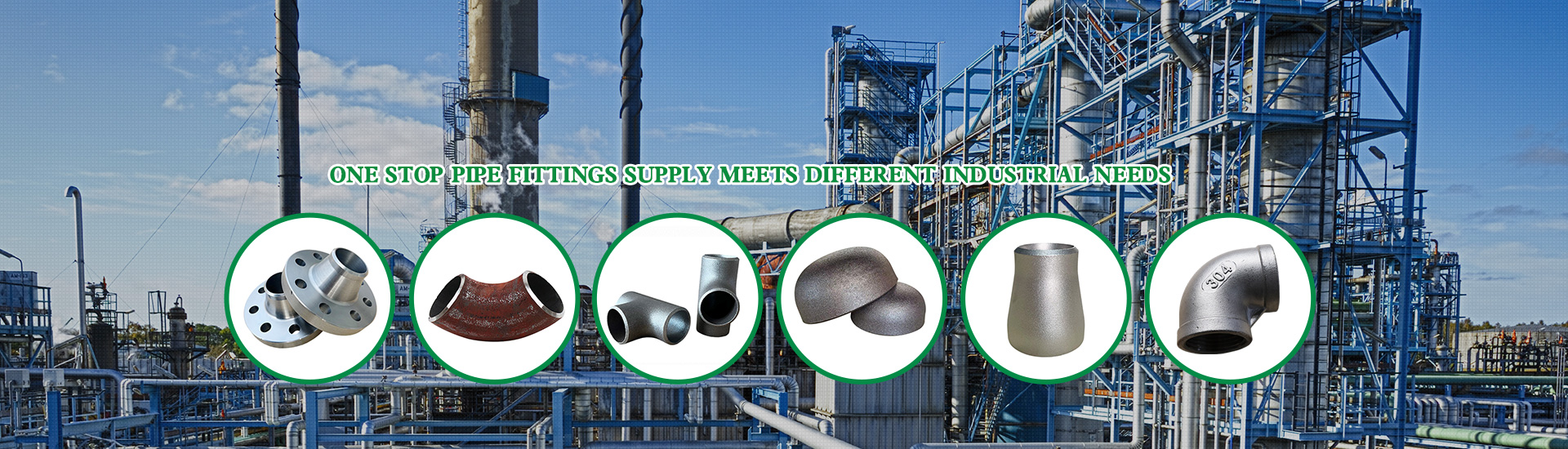
In industrial piping systems, both pipe bends and pipe elbows are used to change the direction of flow. Although they serve a similar function, they are manufactured differently, perform differently, and are used in different engineering scenarios. Understanding their differences is essential for proper pipeline design, cost control, and system performance.
1. Basic Definition
Pipe Elbow
A pipe elbow is a prefabricated fitting used to change the direction of flow at a fixed angle, most commonly 45°, 90°, or 180°.
It is manufactured according to standardized dimensions.
Pipe Bend
A pipe bend is a custom-formed curved section of pipe, created by bending a straight pipe using mechanical or heat-assisted processes.
It is not always a standardized fitting and can be customized.
2. Manufacturing Process Difference
Pipe Elbow
Manufactured in factories using molds or forging
Produced according to standards such as ASME B16.9
Includes seamless or welded construction
High dimensional consistency
Pipe Bend
3. Radius and Flow Characteristics
Pipe Elbow
Fixed radius (commonly long radius 1.5D or short radius 1D)
Higher turbulence compared to smooth bends
More flow resistance in sharp direction changes
Pipe Bend
4. Pressure Drop and Flow Efficiency
Pipe Elbow
Pipe Bend
5. Application Differences
Pipe Elbow Applications
Pipe Bend Applications
Long-distance pipelines
Slurry and abrasive fluid transport
Power plants and process industries
Systems requiring smooth flow transitions
6. Installation and Space Requirements
Pipe Elbow
Pipe Bend
Requires more space due to larger radius
Fewer fittings needed in some pipeline layouts
Better for gradual directional changes
7. Cost Comparison
Pipe Elbow
Pipe Bend
Higher cost for custom fabrication
Depends on bending method and pipe material
May reduce long-term operational costs due to efficiency
8. Strength and Structural Behavior
Pipe Elbow
Pipe Bend
9. Standards and Specifications
Pipe Elbow Standards
ASME B16.9
ASME B16.28
EN 10253
ASTM A234 / A403
Pipe Bend Standards
ASME B31.3 (design requirements)
Project-specific engineering standards
Induction bending specifications
10. Key Differences Summary
Elbow: standardized fitting with fixed angles and radius
Bend: customized curved pipe with flexible radius design
Elbow: better for compact systems
Bend: better for smooth flow and large pipelines
Conclusion
Pipe elbows and pipe bends both serve the purpose of changing flow direction, but they differ significantly in manufacturing method, flow performance, and application scenarios. Elbows are standardized, cost-effective, and suitable for compact piping systems, while bends offer smoother flow characteristics and are ideal for large-scale or high-efficiency pipeline systems. The correct choice depends on engineering design requirements, flow conditions, and installation constraints.
References
ASME B16.9 – Factory-Made Wrought Buttwelding Fittings
ASME B31.3 – Process Piping
ASTM A234 – Pipe Fittings of Wrought Carbon Steel
Crane TP-410 – Flow of Fluids Through Valves, Fittings, and Pipe
EN 10253 – Butt-welding Pipe Fittings Standard
API 5L – Line Pipe Specification