Fusion Bonded Epoxy Coated Pipe
Fusion Bonded Epoxy (FBE) Coated Pipe Product Overview Fusion Bonded Epoxy (FBE) Coated Pipe is a critical component in modern infrastructure, widely recognized as the industry stan...

Product Details
Fusion Bonded Epoxy (FBE) Coated Pipe
Product Overview
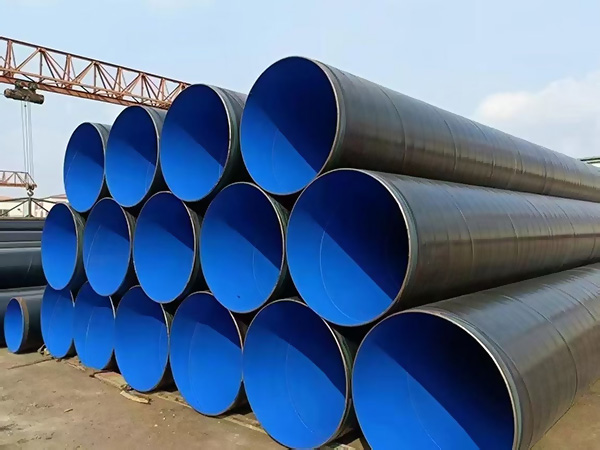
Fusion Bonded Epoxy (FBE) Coated Pipe is a critical component in modern infrastructure, widely recognized as the industry "standard answer" for corrosion protection in oil, gas, and water transmission. This product consists of a steel pipe (seamless, LSAW, or SSAW) coated with a specialized thermosetting epoxy powder. Applied via electrostatic spray to heated steel, the powder melts and fuses to the surface, creating a tough, chemically bonded barrier that protects the metal from corrosion, soil stress, and environmental degradation.
FBE is renowned for its versatility, serving effectively as a standalone coating for water pipes or as the essential primary layer in complex 3-Layer Polyethylene (3PE) systems used for oil and gas.
The Science of Protection
The effectiveness of FBE lies in its application and chemical structure. Unlike liquid paints, FBE is a dry powder applied to steel heated to approximately 230°C (450°F).
Electrostatic Application: The powder is charged and sprayed onto the grounded, heated pipe, ensuring even coverage.
Fusion Bonding: Upon contact, the powder melts, flows, and chemically cross-links (cures) to form a continuous, thermoset film.
Barrier Protection: This creates a dense physical barrier that isolates the steel from moisture, soil, and chemicals.
Cathodic Disbondment Resistance: A key feature of FBE is its ability to work in tandem with Cathodic Protection (CP) systems. If the coating is damaged, the FBE resists "peeling" away from the steel under the influence of the CP current, preventing the corrosion from spreading underneath the coating.
Key Features and Benefits
Industry Standard Reliability: Used since the 1960s, FBE has a proven track record of protecting assets for over 50 years with low failure rates.
Superior Adhesion: The fusion bonding process creates a bond stronger than simple mechanical adhesion, preventing moisture creep.
Chemical & Temperature Resistance: Resistant to acids, alkalis, and soil chemicals. Standard FBE can operate continuously at temperatures up to 80°C–100°C, with high-temperature variants available for specific industrial needs.
Compatibility: It is the foundational layer for multi-layer systems (like 3PE and 3PP) and is fully compatible with cathodic protection.
Hydraulic Efficiency: When used as an internal lining, the smooth epoxy surface reduces friction, increasing flow capacity and preventing scale buildup and bacterial growth (biofouling).
Technical Specifications
Product Name: Fusion Bonded Epoxy (FBE) Coated Pipe
Base Materials: API 5L (Gr. B to X80), ASTM A106, ASTM A53, Ductile Iron.
Coating Standard:
ISO 21809-2:2026: The latest international standard for single-layer FBE coatings in pipeline transportation systems.
CSA Z245.20: Canadian standard widely used globally.
SY/T 0315: Chinese standard for steel pipeline FBE coatings.
Coating Thickness:
Standard (Single Layer): 250 µm – 400 µm (10 – 16 mils).
Heavy Duty / Dual Layer: 450 µm – 1000 µm (18 – 40 mils).
Internal Lining: 200 µm – 500 µm.
Operating Temperature: -30°C to +85°C (Standard); up to 120°C (High-Temp variants).
Color: Typically Black, Grey, or Red (for fire water).
Applications
FBE coated pipes are utilized in critical sectors where asset integrity is non-negotiable:
Oil & Gas Transmission: The primary choice for onshore and offshore pipelines due to its resistance to soil stress and cathodic disbondment.
Water Infrastructure:
Potable Water: Internal FBE lining prevents rust and maintains water quality (compliant with drinking water safety standards).
Sewage/Sludge: Resists chemical attack from wastewater.
Piling & Construction: FBE-coated steel H-piles and sheet pilings are used for bridges and seawalls to resist corrosion in soil and marine environments (ASTM A950/A972).
Fire Protection: Red FBE coatings are standard for fire water lines