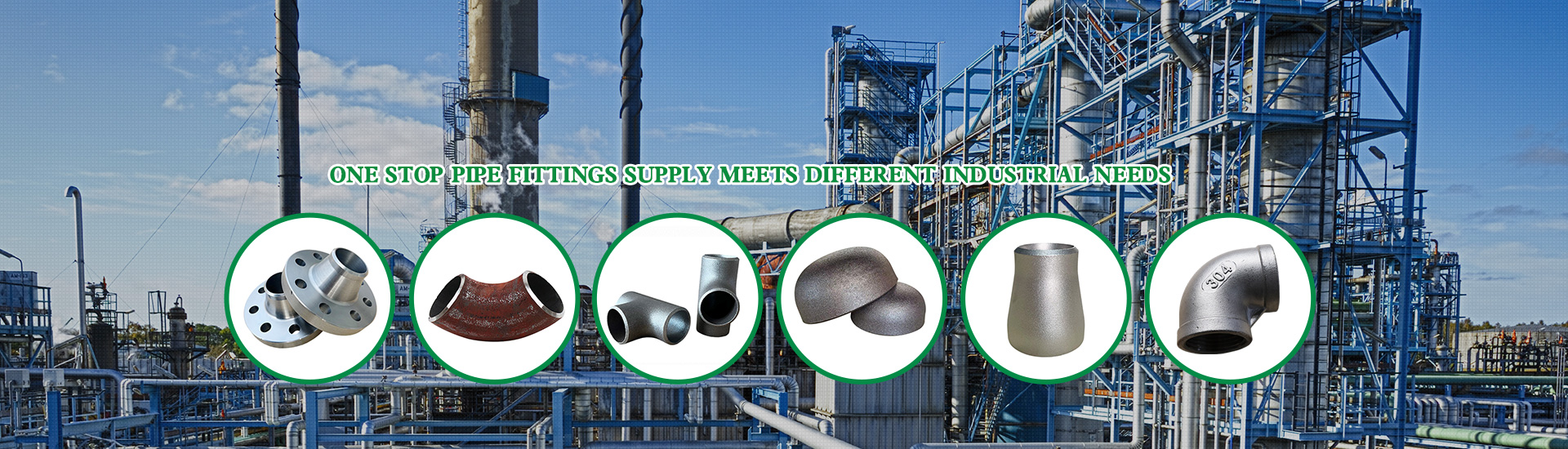
Pipe reducers are essential fittings in oil and gas pipeline systems used to connect pipes of different diameters. Their main function is to ensure smooth flow transition while maintaining pressure stability and reducing turbulence. In oil and gas environments, where flow efficiency and safety are critical, reducers play an important role in system design and operation.
1. What Is a Pipe Reducer?
A pipe reducer is a fitting that joins a larger pipe to a smaller pipe, allowing a gradual change in pipe size.
Types
2. Flow Optimization in Pipeline Systems
One of the primary applications of reducers is improving fluid flow behavior.
Function
Reduces sudden velocity changes
Minimizes turbulence and pressure loss
Maintains steady flow conditions
Oil & Gas Importance
Stable flow is essential for crude oil, natural gas, and refined product transportation over long distances.
3. Pressure Control and System Balance
Reducers help manage pressure variations in pipeline networks.
Benefits
Gradual pressure transition between pipe sizes
Prevents sudden shock loads
Protects downstream equipment
Application
Used between:
4. Pump and Compressor Connections
Reducers are widely used in equipment connection points.
Typical Uses
Why Important
Ensures correct pipe sizing for equipment efficiency and prevents cavitation.
5. Preventing Cavitation in Pump Suction Lines
Eccentric reducers are commonly used in suction lines.
Key Function
Installation Note
Flat side is usually installed on top to avoid vapor accumulation.
6. Pipeline Diameter Transition in Long-Distance Transport
Oil and gas pipelines often change diameter along the route.
Applications
Transmission pipelines
Gathering systems
Distribution networks
Benefit
7. Refinery and Processing Plant Applications
Reducers are widely used in downstream facilities.
Areas of Use
Importance
Ensures controlled flow between process stages.
8. Metering and Instrumentation Systems
Reducers are used in measurement and control systems.
Function
Match pipe size to flow meters
Ensure accurate flow readings
Stabilize flow before instrumentation
Common Practice
Straight pipe length is often required before and after reducers.
9. Eccentric vs Concentric Reducer Applications
Concentric Reducers
Used in vertical pipelines
Maintain symmetrical flow
Common in general transport lines
Eccentric Reducers
Used in horizontal pipelines
Prevent liquid accumulation or gas pockets
Common in pump suction lines
10. Material Selection in Oil & Gas Systems
Reducers must withstand harsh operating conditions.
Common Materials
Carbon steel (ASTM A234 WPB)
Alloy steel (for high temperature services)
Stainless steel (for corrosive environments)
Low-temperature steel (for cryogenic systems)
Selection Factors
11. Safety and Integrity Considerations
Reducers must meet strict industry standards.
Standards
ASME B16.9 (Butt-weld fittings)
API 5L (Pipeline requirements)
ASME B31.3 / B31.4 / B31.8 (Piping codes)
Key Requirements
Conclusion
Pipe reducers are essential components in oil and gas pipeline systems, enabling smooth diameter transitions, pressure control, and efficient flow management. They are widely used in transmission lines, processing plants, pump stations, and instrumentation systems. Proper selection of reducer type, material, and installation orientation is critical to ensure safe, efficient, and long-term pipeline operation.
References
ASME B16.9 – Factory-Made Wrought Buttwelding Fittings
ASME B31.3 – Process Piping
API 5L – Line Pipe Specification
ASME B31.4 – Liquid Transportation Systems
Crane TP-410 – Flow of Fluids Through Valves, Fittings, and Pipe
ISO 15590 – Induction Bends, Fittings and Flanges for Pipeline Systems