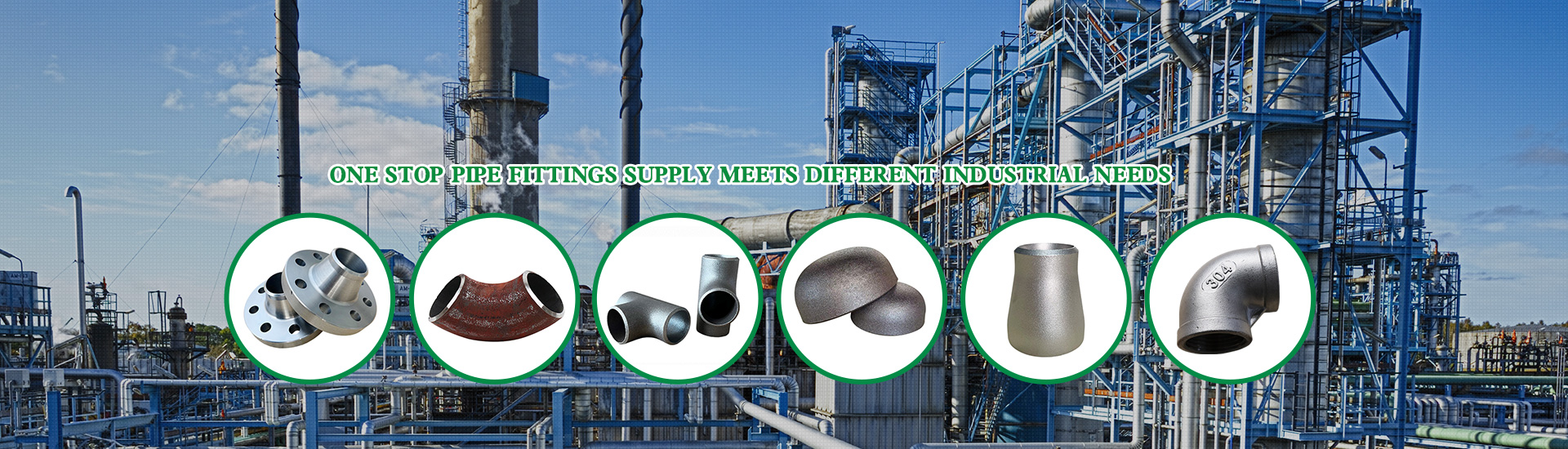
Material selection represents one of the most critical decisions in piping system design, directly impacting performance, safety, and lifecycle costs. Pipe fittings manufactured from different material grades exhibit varying mechanical properties, corrosion resistance, and temperature capabilities. Understanding these differences enables engineers and specifiers to select appropriate materials that match service conditions while optimizing project costs. This comprehensive guide examines common material grades used in industrial pipe fittings and their typical applications.
Carbon Steel Pipe Fittings
Carbon steel serves as the workhorse material for pipe fittings in general industrial applications. The term carbon steel encompasses alloys where carbon represents the primary alloying element, with manganese present in amounts up to approximately 1.65 percent. The carbon content directly influences hardness and strength, with higher carbon grades providing increased strength at the expense of reduced ductility and weldability.
ASTM A234 covers wrought carbon steel piping fittings for moderate and elevated temperature service. This specification includes several grades designated by chemical composition, with WPA representing the most common grade for general purpose applications. The WPB grade contains higher carbon content and provides enhanced strength for higher temperature service. Carbon steel fittings handle water, steam, air, and petroleum products at temperatures ranging from cryogenic conditions through approximately 750 degrees Fahrenheit, depending on the specific grade and pressure conditions.
Carbon steel pipe fitting manufacturers produce fittings through various methods including forging, pressing, and welding. Forged fittings offer superior mechanical properties and are preferred for critical applications, while fabricated fittings provide economical solutions for large diameter or non-critical installations. Heat treatment processes normalize the material and relieve stresses from manufacturing operations, ensuring consistent mechanical properties throughout the fitting.
Stainless Steel Grades and Their Applications
Stainless steel pipe fittings provide excellent corrosion resistance for applications requiring protection from aggressive chemicals or moisture. The chromium content, minimum 10.5 percent, creates a passive oxide layer on the surface that protects against corrosion. Adding nickel stabilizes the austenitic crystal structure and improves formability and cryogenic properties. Various grades address specific application requirements ranging from general corrosion resistance to extreme temperature service.
Type 304 and Type 304L represent the most common stainless steel grades for pipe fittings, offering good corrosion resistance and excellent weldability. The low carbon variant (304L) minimizes carbide precipitation during welding, preventing intergranular corrosion in the heat-affected zone. Type 316 and Type 316L add molybdenum for improved resistance to chloride-induced pitting and crevice corrosion, making them suitable for marine environments and chemical processing applications containing chlorides.
Type 321 stainless steel contains titanium additions that stabilize the microstructure against sensitization, making it suitable for high-temperature applications up to 1500 degrees Fahrenheit. Type 310 offers superior oxidation resistance for high-temperature service, commonly found in furnace components and heat treatment equipment. Duplex stainless steels combine austenitic and ferritic structures, providing twice the strength of conventional austenitic grades with improved chloride stress corrosion resistance.
Alloy Steel Pipe Fittings
Alloy steel fittings serve high-temperature and high-pressure applications where carbon steel lacks sufficient strength or oxidation resistance. Chromium-molybdenum alloys, commonly called chrome-moly or CrMo, form the backbone of alloy steel piping systems in refineries, chemical plants, and power generation facilities. These alloys derive their enhanced properties from controlled additions of chromium, molybdenum, vanadium, and other elements.
ASTM A234 includes several alloy steel grades designated by their composition. WP11 contains 1.25 percent chromium and 0.5 percent molybdenum, suitable for temperatures up to approximately 1000 degrees Fahrenheit. WP22 increases chromium to 2.25 percent and molybdenum to 1.0 percent, extending service temperature capability to 1100 degrees Fahrenheit. WP5 and WP9 add additional chromium for enhanced oxidation resistance in the most demanding high-temperature applications.
Chrome-moly alloy fittings require careful handling during fabrication due to their susceptibility to hydrogen embrittlement and creep deformation at elevated temperatures. Preheat and post-weld heat treatment prevent cracking and ensure proper mechanical properties in the completed joint. Manufacturing facilities producing alloy fittings maintain strict quality control procedures including material certification, heat treatment verification, and non-destructive examination to guarantee reliable performance in critical applications.
Specialty Materials for Corrosive Service
Applications involving extremely aggressive chemicals require specialty materials beyond conventional stainless steels and alloys. Nickel-base alloys provide exceptional corrosion resistance for the most demanding environments including concentrated acids, seawater, and halogen-containing process streams. Inconel alloys perform admirably in oxidizing and reducing environments, while Hastelloy variants address specific corrosive conditions like hydrochloric acid and chlorides.
Titanium fittings offer outstanding corrosion resistance for marine applications and oxidizing chemical environments. The metal naturally forms a protective oxide layer that resists attack from seawater and many industrial chemicals. However, titanium's higher cost limits application to situations where its unique properties justify the investment. Copper-nickel alloys address seawater service requirements, providing good corrosion resistance at moderate cost compared to more exotic materials.
Selecting specialty materials requires careful analysis of the specific corrosive agents, concentrations, temperatures, and flow conditions. Consulting with腐蚀 specialists and material suppliers helps identify the most cost-effective solution that provides reliable service life. Factory testing and reference installations provide valuable performance data for materials operating in similar conditions.
Material Selection Guidelines
Effective material selection balances performance requirements with cost considerations across the project lifecycle. Initial material cost represents only a fraction of total ownership expense, which also includes installation, maintenance, inspection, and potential replacement costs. Selecting under-specified materials leads to premature failure, unplanned downtime, and safety hazards. Over-specifying wastes project budget without proportional performance benefits.
Establishing material selection criteria based on service conditions ensures consistent decisions throughout the project team. Corrosion allowance, temperature limits, pressure requirements, and cleaning requirements all influence material choices. Involving maintenance and reliability personnel in material selection brings operational perspective to engineering decisions, identifying potential issues before they become problems.
Conclusion
Understanding material grades enables appropriate selection of pipe fittings that provide reliable performance throughout their service life. Carbon steel addresses general industrial applications, while stainless steel and alloys serve increasingly demanding environments. Quality manufacturing and proper fabrication techniques ensure materials perform as specified in the installed system.
References
American Society for Testing and Materials. (2021). ASTM A234 - Standard Specification for Piping Fittings of Wrought Carbon Steel and Alloy Steel for Moderate and Elevated Temperatures.
American Society for Testing and Materials. (2022). ASTM A403 - Standard Specification for Wrought Austenitic Stainless Steel Piping Fittings.
European Association of the Valve and Fitting Industry. (2020). Guideline for Material Selection for Valve and Fitting Components.
International Association of Corrosion Engineers. (2019). NACE MR0175 - Petroleum and Natural Gas Industries - Materials for Use in H2S-Containing Environments in Oil and Gas Production.